From other countries
Adrian A
5.0 out of 5 stars Probably the key to understanding contemporary Venezuela
Reviewed in the United States on 19 May 2019
Format: KindleVerified Purchase
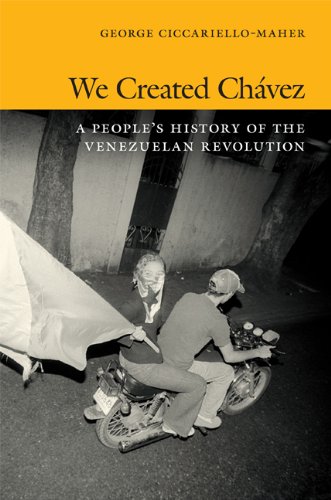
What the author gets right above all else is his “people’s history” method. Most histories favor the great men or the institutes of power that apparently move the world. But what is clearly shown in the case of Venezuela, it is that the power of the forgotten and oppressed people is the engine of revolution. It precedes and succeeds the waxing and waning of any revolution or administration. As such, if any progress is to be made and maintained, it is dependent on the consciousness and will of the people as well as the ability for the state to cede power and responsibility to the people. Or else it will just maintain the oppressive power structures any revolution is trying to destroy.
In the end, as in the author’s pamphlet “Building the Commune”, the only way to save the Bolivarian Revolution from reactionary regression is to bet it all on the Communes. If not and the state becomes disconnected from people power, as the author writes, like Robespierre and Toussaint, the revolution will guillotine itself.
Ciccariello-Maher’s writing lays bare what is missing from present media coverage about Venezuela, the complex voice of the people in the barrios, campesinos, and militant revolutionaries. There are no elite voices romantically trying to convince you how great things were before Chavez, because these people were struggling before Chavez. And it’s their efforts that created Chavez. And the poor and “wretched” (Fanon refs abound in this book) that the rich fear will always be there with, without, and even against Chavez.
Another recommended companion book to this is often cited within this book and it is called “Venezuela Speaks”. It is comprised of interviews of grassroots movements in Venezuela.
And lastly, shame on the reactionary conservatives that have review bombed this book. Ciccariello-Maher’s work will be an indispensable contribution to understanding Chavismo and 21st century Latin American history.
6 people found this helpful
Report
Jafnhár Neff
5.0 out of 5 stars Wonderful for self-education
Reviewed in the United States on 3 September 2014
Format: PaperbackVerified Purchase
Don't believe the negative reviews that led to a low overall rating, they're from people ignorant of Venezuela, guided only by their misguided hatred they give one star to many, many books about Chavez, the Bolivarian Revolution, and Socialism generally that present a clear and balanced perspective. This is easy to understand, as reality does not tip in these individuals's favor.
I myself really quite enjoyed this book, I bought it because I am incredibly interested in the situation over in Venezuela, but was equally worried about distortion and possibly misrepresentations from sources such as the Bolivarian government and major media outlets. This book focuses on the people and movements that built into the revolution, and interviews many participants of the movements past and present, as well as painting a very useful image of why these things left Venezuela today, making an effort to prove that Chavez didn't create this movement, he merely seized upon a growing current and empowered it. Definitely worth the read to anyone interested in an impartial view of Venezuela, as both approving and dissenting views are shown, with neither being given precedence over the other.
The book includes interviews from Anarchists and gives an the reader idea of how they interact with Chavismo and the Venezuelan government: with support, if from a critical perspective. Further things detailed are attempts to build Communes, the general expansion of "communal power" (direct democracy) and how Communal Councils function and what some have accomplished, and perhaps most importantly to any modern Leftist it details early attempts at instituting workplace democracy. There are citations provided at the end of the book as well as recommended sources for further self-education.
A very lovely book, all in all.
43 people found this helpful
Report
C
4.0 out of 5 stars Worth the Read - Ignore the Hype Behind Ciccariello-Maher
Reviewed in the United States on 23 April 2017
Format: PaperbackVerified Purchase
I was introduced to this book through a Latin American Philosophy course I was taking. Upon reading the reviews, I was a bit discouraged thinking I was going to have to read this poorly rated book; however, after diving into the personal controversy surrounding Ciccariello-Maher and his more recent Twitter-Tirades, it became evident that much of the negative reviews were based on this and not the actual book.
Overall, I found the book rather thought provoking and YES, a good read. Ciccariello-Maher employs a "history from below" approach in retelling the events that led to the 1998 election of Hugo Chávez. Therefore, Ciccariello-Maher places emphasis on how the various aspects of the revolutionary movements by people brought Chávez into power. This is opposed to prior scholarship that has largely focused on the perspectives and how those in leadership roles were effected during the four decades covered in the book.
So before you dismiss this book all together, I highly recommend giving it a chance. It truly is worth reading, if for nothing more than to gain a different view of this very complicated and crucial time period in Venezuela's history.
24 people found this helpful
Report
J. Hurd
5.0 out of 5 stars Amazing book!
Reviewed in the United States on 9 November 2017
Format: PaperbackVerified Purchase
Having read a dozen or so books in the last couple of years about Venezuelan politics, Hugo Chavez, and the Bolivarian Revolution, let me say that none can compare with this one. Ciccariello-Maher is no cheerleader for Chavez, but he is nevertheless a supporter of the revolutionary process unfolding in Venezuela. Through interviews with Venezuelan leftists, ex-guerillas, community organizers and political activists, he gives us a well rounded history of the Chavez years, and an advanced understanding of the continued struggle for twenty first century socialism. Disregard the many, many one star reviews here. They are reactionary fools who have not read the book and are just here to vent against Ciccariello-Maher for tweeting against racism and fascism. When you finish this book, check out Building the Commune as well, a quick short read and a nice update to We Created Chavez.
16 people found this helpful
Report
HD Thoreau
5.0 out of 5 stars Excellent analysis, a bit overly academic
Reviewed in the United States on 8 May 2014
Format: PaperbackVerified Purchase
An important analysis of the bolivarian revolution as a possible avenue of struggle for the left - neither solely the marxist model of seizing the state through a vandgaurd party nor the anarchist shunning of the state.
I would have liked more attention to the militant barrio organizations where we begin. Also somebody needs to pass on the message to write in plain English. This read like a spruced up PhD thesis, which maybe it is. Still excellent, but probably unreadable if you haven't spent years in a certain kind of university setting.
32 people found this helpful
Report
Kim Scipes
5.0 out of 5 stars Building for liberation in Venezuela
Reviewed in the United States on 5 December 2013
Format: PaperbackVerified Purchase
Really "locates" the struggles in Venezuela, and what we see is that the struggle for liberation extended far beyond Hugo Chavez, and at times challenged him, to go even farther. Excellent book! And a great read. It's why I'm confident that the struggle in Venezuela will go on long after Chavez' untimely death.
40 people found this helpful
Report
Amazon Customer
5.0 out of 5 stars Necessary reading on the Venezuelan revolutionary struggle
Reviewed in the United States on 11 July 2017
Format: PaperbackVerified Purchase
A very detailed history of the Venezuelan revolutionary movement, the different forces at play, and the different movements that all culminated into the Bolivarian movement. If you want to understand the struggles of the Venezuelan people, this is the best place to start.
14 people found this helpful
Report
Sponsored
Need customer service?
‹ See all details
===
조지 시카렐로-마어(George Ciccariello-Maher)의 저서 <We Created Chávez: A People's History of the Venezuelan Revolution> (우리가 차베스를 만들었다: 베네수엘라 혁명의 민중사, 2013)에 대한 1,000단어 분량의 요약 및 평론입니다.
<We Created Chávez> 요약 및 평론
1. 서론: '차베스'라는 현상의 기원을 다시 쓰다
베네수엘라의 볼리바르 혁명을 다룰 때, 대다수의 서구 언론과 학계는 우고 차베스라는 '카리스마적 지도자' 혹은 '포퓰리스트 독재자' 개인에게 초점을 맞춘다. 그들의 서사 속에서 차베스는 갑자기 나타나 빈민을 선동하고 권력을 장악한 인물이다. 그러나 조지 시카렐로-마어의 <We Created Chávez>는 이러한 <위인 중심의 역사관(Great Man Theory)>을 정면으로 반박한다.
이 책의 핵심 주장은 제목에 명확히 드러나 있다. 차베스가 혁명을 만든 것이 아니라, 베네수엘라의 민중(빈민, 노동자, 학생, 급진적 좌파 활동가)이 차베스를 자신들의 도구이자 대변자로 <만들어냈다>는 것이다. 저자는 차베스 집권 이전 수십 년간 축적된 민중 투쟁의 역사를 추적하며, 볼리바르 혁명의 진정한 동력은 대통령궁이 아니라 카라카스의 빈민가(barrios)에 있음을 증명한다.
2. 요약: 혁명의 계보학
1) 1958년의 배신과 무장 투쟁의 시작
책은 1958년 푼토피호 협약(Puntofijo Pact) 체제에서 시작한다. 베네수엘라의 엘리트 정당들은 민주주의라는 이름 하에 석유 수익을 독점하고 민중을 배제했다. 이에 대항해 1960년대부터 공산당과 급진 좌파들은 무장 게릴라 투쟁을 전개했다. 비록 군사적으로는 패배했지만, 이들은 산악지대에서 도시 빈민가로 스며들어 <대안적 사회 조직>을 건설하고 급진적 정치 문화를 배양했다. 저자는 이 시기를 실패가 아닌, 혁명적 주체가 형성되는 잠복기로 해석한다.
2) 1989년 카라카소(Caracazo): 결정적 전환점
이 책에서 가장 중요하게 다루는 사건은 1998년 차베스의 당선이 아니라, 1989년의 <카라카소> 봉기다. 신자유주의 긴축 정책에 분노한 민중들이 수도 카라카스를 점거하고 약탈과 시위를 벌였던 이 사건은, 수천 명이 학살당하며 끝났지만 베네수엘라 정치의 지형을 완전히 바꿔놓았다. 카라카소는 기존 정당 체제의 파산을 선고했으며, 군부 내의 급진 세력(차베스를 포함한)에게 "더 이상 민중에게 총을 쏘지 않겠다"는 각성을 일으키는 계기가 되었다. 즉, 차베스의 1992년 쿠데타 시도는 카라카소라는 민중 봉기에 대한 군부의 <응답>이었다.
3) 1992년 쿠데타와 2002년의 방어
1992년 차베스의 쿠데타가 실패했을 때, 그가 방송에서 말한 "지금으로서는(por ahora)"이라는 한마디는 민중들에게 신호탄이 되었다. 하지만 저자는 차베스가 구세주가 아니라, 민중들이 오랫동안 찾아 헤매던 <정치적 무기>였음을 강조한다.
이 관계는 2002년 우익 쿠데타 당시 극적으로 증명된다. 차베스가 납치되었을 때, 그를 구출하고 권좌로 복귀시킨 것은 군 장성들이 아니라, 대통령궁을 포위하고 헌법 수호를 외친 빈민가 주민들이었다. 이는 "차베스가 우리를 이끄는 것이 아니라, 우리가 차베스를 지키고 이끈다"는 민중 권력(Poder Popular)의 실체를 보여준 사건이었다.
4) 이원적 권력(Dual Power): 거리와 국가의 긴장
책의 후반부는 차베스 집권기 동안의 <국가 기구>와 <기층 민중 조직> 간의 긴장 관계를 다룬다. 볼리바르 서클, 공동체 평의회(Consejos Comunales), 노동자 관리 공장 등은 국가의 지원을 받으면서도 끊임없이 관료주의와 부패에 저항했다. 저자는 혁명이 완성된 것이 아니라, 관료화되려는 국가와 자율성을 지키려는 민중 사이의 끊임없는 변증법적 투쟁 과정에 있다고 분석한다.
3. 평론: 아래로부터의 역사 쓰기
1) 신화 해체와 주체 복원
이 책의 가장 큰 미덕은 베네수엘라 혁명을 '포퓰리스트의 선동'으로 격하시키는 서구 자유주의의 시각과, 반대로 차베스를 무결점의 영웅으로 숭배하는 일부 좌파의 시각을 동시에 넘어선다는 점이다. 시카렐로-마어는 방대한 인터뷰와 현장 조사를 통해 <이름 없는 영웅들>—학생 운동가, 게릴라 출신 조직가, 빈민가 여성 리더—을 역사의 전면에 내세운다. 이는 E.P. 톰슨의 <영국 노동계급의 형성>을 연상시키는 탁월한 '아래로부터의 역사' 서술이다.
2) '구성된 권력'과 '구성하는 권력'의 역학
이론적으로 이 책은 안토니오 네그리 등이 말한 <구성하는 권력(constituent power, 민중의 창조적 힘)>과 <구성된 권력(constituted power, 제도화된 국가)>의 긴장을 베네수엘라의 맥락에서 구체화했다. 차베스는 이 두 권력이 만나는 교차점이었다. 저자는 차베스 사후 베네수엘라가 겪을 위기를 예견하듯, 혁명의 생명력은 지도자가 아닌 기층 조직의 자율성에 달려 있음을 역설한다.
3) 비판적 검토: 낭만화의 위험성?
물론 비판할 지점도 있다. 저자는 기층 민중(바리오 거주민)의 폭력이나 무장 투쟁을 다소 낭만화하는 경향이 있다. '혁명적 폭력'을 정당방위나 정치적 의사표현으로 해석하는 것은 타당한 면이 있으나, 그것이 사회 전체의 치안 불안이나 또 다른 형태의 강압으로 변질될 위험성에 대해서는 상대적으로 관대하다. 또한, 석유 경제(지대 추구)가 기층 조직의 자율성을 어떻게 침식했는지에 대한 경제적 분석보다는 정치적 역동성에 치중해 있다.
4) 현재적 의의
오늘날 마두로 정권 하에서 베네수엘라가 겪는 혼란을 이해하기 위해서도 이 책은 필수적이다. 서구 언론은 이를 단순히 "사회주의의 실패"로 묘사하지만, 이 책의 관점을 빌리자면 현재의 위기는 <국가 관료주의가 기층 민중 권력을 압도하거나, 민중과의 연결 고리를 잃어버린 결과>로 해석할 수 있다. 차베스라는 구심점이 사라진 후, '우리가 차베스를 만들었다'고 외쳤던 그 민중들이 지금은 어떤 선택을 하고 있는지, 왜 여전히 많은 이들이(비록 고통스럽더라도) 혁명의 유산을 지지하거나 혹은 떠나는지를 이해하려면, 이 책이 보여주는 심층적인 사회 구조 분석이 필요하다.
4. 결론
<We Created Chávez>는 베네수엘라 현대사를 이해하는 데 있어 대체 불가능한 텍스트다. 이 책은 혁명이 한 명의 영웅에 의해 하사되는 선물이 아니라, 수많은 보통 사람들이 일상과 거리에서 싸워 쟁취하고 만들어가는 고단한 과정임을 웅변한다. 차베스는 갔지만, 그를 '만들어냈던' 민중의 역동성은 여전히 베네수엘라의 미래를 결정짓는 가장 중요한 변수일 것이다.
요약 및 평론을 마치며
이 책은 베네수엘라의 정치 상황을 단순히 '독재 vs 민주주의'의 이분법이 아니라, '기층 민중의 자율적 조직화'라는 관점에서 매우 심도 있게 다루고 있습니다.
이 책과 관련하여 다음 단계로 제가 해드릴 수 있는 일은:
이 책에서 중요하게 다루는 <2002년 쿠데타 당시 민중들의 구체적인 저항 과정>에 대해 800단어로 더 상세히 정리해 드리거나, 저자가 언급한 **<베네수엘라의 급진적 도시 빈민 조직(Colectivos)의 역사와 역할>**에 대해 따로 요약해 드릴 수 있습니다. 원하시는 방향을 말씀해 주세요.
===
===
<한국어: 1,000단어 요약+평론>
<저자/책 소개>
<We Created Chávez: A People’s History of the Venezuelan Revolution>은 흔히 “차베스가 베네수엘라 혁명을 만들었다”는 영웅 서사를 뒤집고, 그 반대로 “민중의 오랜 투쟁과 조직화가 차베스를 ‘만들었다’”는 관점에서 1958년 이후 베네수엘라 정치사를 ‘아래로부터’ 재구성하는 책입니다. 저자는 영어권에서 “George Ciccariello-Maher”로 더 널리 알려져 있고, 대중적으로는 “Geo Maher”라는 이름을 쓰기도 합니다. 이 책은 2013년경 Duke University Press에서 출간된 것으로 알려져 있습니다. bibliovault.org+1
<핵심 주장 1: ‘차베스 이전’의 긴 시간—1958년 이후의 “빈 껍데기 민주주의”와 저항의 축적>
책의 큰 줄기는 1958년 독재 붕괴 이후 등장한 정당 중심 체제가 ‘형식적 민주주의’로 정착하면서도, 실제로는 엘리트 담합·부패·배제의 구조를 고착화했고, 그 틈에서 학생, 노동자, 빈민가(바리오) 주민, 여성, 아프로-베네수엘라인, 원주민 등 다양한 주체가 오랜 시간 축적된 저항의 문화를 만들어 왔다는 서술입니다. 이 과정에서 저자는 “혁명은 1992년 쿠데타 시도나 1998년 선거 승리로 시작된 게 아니라, 더 오래된 사회운동의 퇴적층 위에서 폭발했다”는 식의 시간감각을 강조합니다. sdonline.org+1
<핵심 주장 2: ‘카라카소’(1989)와 국가 폭력—급진화의 분기점>
책에서 중요한 전환점은 1989년의 대중 봉기(카라카소)와 그에 대한 국가 폭력입니다. 이 사건은 “국가가 빈민을 어떻게 관리·억압해 왔는가”를 드러내며, 이후 운동권의 급진화와 새로운 정치적 상상력(기성 정당 질서 바깥의 대안)을 촉발한 분기점으로 다뤄집니다. 저자의 논지는, 차베스 개인의 카리스마보다도 이러한 집단적 기억과 분노, 그리고 조직적 네트워크가 ‘새 리더십을 요구하고 떠받칠 토양’을 만들었다는 데 있습니다. (이 대목은 영어권 주류 보도에서 흔한 ‘차베스 개인의 포퓰리즘’ 프레임을 우회하게 해줍니다.) sdonline.org+1
<핵심 주장 3: 국가 권력 vs. 대중 권력—“상호 형성”의 긴장>
책의 설득력은 “국가(차베스 정부)”와 “사회운동(민중 조직)”을 단순히 협력/배신의 이분법으로 처리하지 않고, 둘 사이의 상호작용—때로는 동맹, 때로는 충돌, 때로는 제도 안팎의 줄다리기—을 핵심 분석 대상으로 삼는 데 있습니다. 저자 스스로도 ‘왜 급진 혁명세력이 국가 수반(차베스)을 지지했는가’라는 질문을 전면에 놓고, 그 답을 “운동이 국가를 이용하기도 하고, 국가는 운동을 흡수·관리하려 하기도 하는” 복합적 관계에서 찾습니다. eialonline.org
<핵심 주장 4: ‘민중이 차베스를 만들었지만, 거기서 멈추지 않는다’—코뮌/공동체 권력의 지향>
저자가 이후 다른 글에서 더 직접적으로 말하듯, “차베스가 혁명을 만든 것이 아니고, 국가가 코뮌을 만든 것도 아니다. 운동이 차베스를 ‘만든’ 뒤에도, 아래로부터의 급진 민주주의를 계속 구축한다”는 시선이 이 책의 후방 동력입니다. 즉 이 책은 ‘차베스 찬반’보다, ‘대중 권력이 어떻게 형성되고 유지되는가’라는 질문에 더 가깝습니다. Verso
<평론: 이 책의 강점>
-
<영웅서사를 해체하는 역사서술> — 차베스를 “원인”이 아니라 “결과”로 배치함으로써, 혁명의 주체를 대중에게 되돌립니다. 이는 베네수엘라를 “한 지도자가 흔든 나라”로만 소비하는 바깥의 시선을 교정하는 효과가 큽니다. Venezuelanalysis+1
-
<다중 주체의 등장> — 노동자·학생만이 아니라 여성, 아프로-원주민, 빈민가 조직 등 복수의 주체를 전면화합니다. “민중”을 단일 덩어리로 뭉개지 않고 내부의 차이를 드러내려는 시도가 돋보입니다. World of Books+1
-
<국가-운동 관계를 ‘정치’로 복원> — “국가는 타락, 운동은 순수” 같은 도덕극 대신, 권력의 장 속에서 벌어지는 협상·경쟁·상호의존을 보여줍니다. eialonline.org+1
<평론: 한계와 읽는 법>
-
<출간 시점의 제약> — 2013년 출간이라는 시간대 때문에, 이후 심화된 경제·사회 위기 국면(물가, 외환, 생산 붕괴, 제재, 정치적 양극화의 격화 등)을 이 책만으로 ‘결론’내리기 어렵습니다. 이 책은 ‘기원과 형성’에 강하고, ‘장기적 성과/부작용의 총결산’에는 덜 맞습니다. biblio.co.uk+1
-
<대칭성의 부족 가능성> — 저자는 주류 언론의 과장·왜곡을 비판하며 대체 서사를 세우는 데 성공하지만, 그 과정에서 반대편(중산층·야권·관료제 내부의 이해관계, 국가의 통제 욕구와 부패 문제 등)을 충분히 ‘두껍게’ 그렸는지는 독자에 따라 아쉬울 수 있습니다. 이런 점은 다른 성향의 연구(예: 제도·권력분립·경제정책 평가 중심)와 교차독해하면 보완됩니다.
-
<그럼에도 남는 질문> — 책이 던지는 가장 생산적인 질문은 이것입니다. <아래로부터의 힘이 국가 권력을 ‘자기 것으로’ 만들 수 있는가?> 혹은 <국가 권력은 결국 아래로부터의 힘을 흡수·무력화하는가?> 이 질문은 베네수엘라만이 아니라, 어떤 급진 민주주의 실험에도 그대로 적용됩니다.
<English: ~1,000-word summary + review>
<We Created Chávez: A People’s History of the Venezuelan Revolution> reframes the Bolivarian Revolution by reversing the familiar “great man” storyline. Instead of treating Hugo Chávez as the prime mover, Geo (George Ciccariello-)Maher argues that decades of grassroots organizing—among militants, students, workers, women, Afro-descendant and Indigenous communities, and barrio movements—created the conditions for Chávez’s rise and shaped what “Chavismo” became. The book, published around 2013 by Duke University Press, positions itself as a bottom-up political history rather than a leader-centered biography. bibliovault.org+1
<Summary: the long prehistory of revolution (1958 onward)>
A central move is chronological. The book insists that the revolution did not begin with Chávez’s 1992 coup attempt or his 1998 electoral victory—common markers in mainstream narratives—but must be traced through the post-1958 political order that followed the fall of dictatorship. That order, while formally democratic, is presented as increasingly hollow: dominated by elite pacts, corruption, exclusion, and recurrent repression. Against this backdrop, the author reconstructs the “subterranean” history of popular struggle, showing how oppositional cultures and organizational networks formed long before Chávez entered the national stage. sdonline.org+1
<Caracazo (1989) as rupture and memory>
The 1989 Caracazo uprising and the state’s violent response function as a key rupture. In the book’s telling, Caracazo is less an isolated riot than a formative trauma and turning point: it exposes the coercive foundations of the existing order and accelerates radicalization, especially among the poor and among militants who come to see institutional channels as blocked. This matters for the author’s core thesis: Chávez’s later legitimacy is rooted not simply in charisma or populist messaging, but in a collective memory of betrayal and violence—and in the practical infrastructures of mobilization that grew from it. sdonline.org+1
<State power and popular power: not purity vs betrayal, but a political relationship>
One of the book’s most valuable contributions is analytical rather than descriptive. Maher foregrounds a guiding question—why would radical revolutionary groups support a head of state and the institutional apparatus he represents?—and answers it by treating state–movement relations as dynamic and contested. The Chávez government is neither reduced to a mere instrument of popular will nor condemned as inevitable co-optation. Instead, the book tracks shifting alignments: moments when movements push the state leftward, moments when the state attempts to manage, channel, or absorb militancy, and moments of friction that reveal competing visions of revolution. eialonline.org
<The “people created Chávez”—and then kept building>
The title is not just a claim about origins; it implies an ongoing process. In later writing, the author states the broader point explicitly: Chávez did not create the revolution, and the state did not create grassroots institutions like communal councils or communes; rather, popular movements created Chávez and continued building radically participatory self-government from below. This framing makes the book a prelude to the author’s later focus on communes and “dual power,” but the conceptual seed is already here: revolution as an uneven, multi-sited struggle over where sovereignty actually lives. Verso
<Review: strengths>
-
<A corrective to leader-centric media frames>. The book is persuasive as an antidote to portrayals that attribute Venezuela’s political transformation primarily to Chávez’s personality. By relocating agency in organized communities and long-term struggle, it changes what questions feel natural to ask—less “Was Chávez good or bad?” and more “How do popular forces make and remake the state?” Venezuelanalysis+1
-
<A plural “people”>. The “people” in this people’s history is not a single mass. The attention to women, Afro-descendant and Indigenous struggles, students, and barrio formations helps prevent the romantic flattening that sometimes accompanies revolutionary storytelling. World of Books+1
-
<Politics without moral melodrama>. The book’s depiction of state–movement relations is at its best when it refuses easy binaries (pure grassroots vs corrupt state). It instead shows the messy political trade-offs that appear whenever movements engage institutions. eialonline.org+1
<Review: limits and how to read it productively>
-
<Temporal constraint>. Published around 2013, the book is strongest on origins, formation, and early-to-mid revolutionary dynamics. Readers looking for a full accounting of subsequent crisis dynamics—macroeconomic collapse trajectories, sanction regimes, governance breakdowns, and the later intensification of polarization—will need complementary works and more recent research. biblio.co.uk+1
-
<Potential asymmetry>. Because the project is partly polemical—countering caricatures in dominant Anglophone coverage—it may under-develop certain internal critiques: bureaucratic incentives, corruption logics, intra-Chavista conflicts, or the lived rationalities of opposition constituencies. This is not a fatal flaw, but it is a reason to pair the book with institution-focused or economy-centered analyses for triangulation.
-
<The enduring question>. The book leaves you with a hard, transferable question: <Can popular power institutionalize itself without being neutralized by the state form?> That question—about co-optation, autonomy, and “dual power”—is relevant far beyond Venezuela and is arguably the book’s most lasting gift.
원하시면, 이 책의 관점(아래로부터의 역사)과 더 제도·경제정책 중심의 분석서 2–3권을 함께 묶어 <교차독해 가이드> 형태로 정리해드릴게요.
===
===


No comments:
Post a Comment