The Times' Lazy Vietnam-Cuba Comparison
The NYT minimizes U.S. genocidal policy in Cuba in an article urging Cuba to replicate Vietnamese-style reforms
nathan
Aug 30, 2025
Last Wednesday, the New York Times published an article looking at a Vietnamese donation campaign for aid to Cuba. The campaign, started by the Central Committee of the Vietnamese Red Cross Society, swept across social media, attracting more than $13 million in donations during its first week. Vietnam has shared a long friendship with Cuba, with Cuban barbudos long admiring the Viet Cong.
Cuba was the first country to recognize the Provisional Revolutionary Government of South Vietnam and the only country to ever appoint an ambassador to South Vietnam’s liberated zones. Later on, Cuban pilots are thought to have fought alongside the North Vietnamese during the Vietnam War. In 1973, amid active U.S. bombing campaigns, Castro became the only world leader to visit a Viet Cong stronghold when he went to Quang Tri and declared, “For Vietnam, we are even willing to give our own blood.” The friendship between Cuba and Vietnam has been truly special and mutual, with Vietnam also assisting Cuba in developing its rice production and achieving greater food security. What could have been a story examining this mutual solidarity instead was an attempt to condemn Cuban socialism without offering much-needed context.
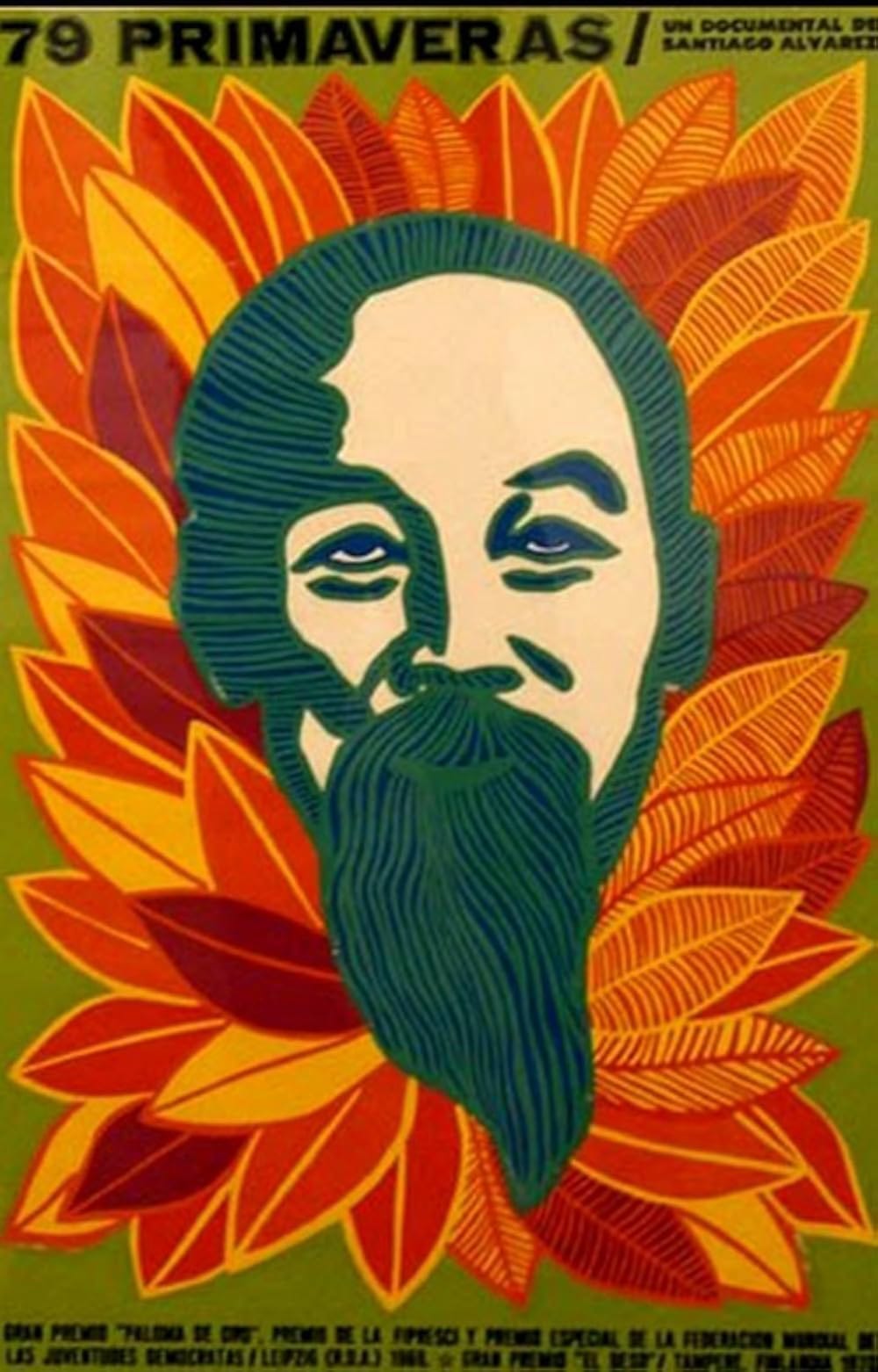
Movie poster for Cuban film 79 Primaveras (“79 Springs”), which honors Ho Chi Minh by examining his influence on worldwide social movements.
The story uses the campaign to explore the differing economic approaches of Cuba and Vietnam since the Cold War’s final act. Vietnam opted to implement economic liberalization reforms (known as the Đổi Mới process) while Cuba mostly kept to its Communist model. Not entirely, though.
Cuba has implemented an array of market reforms since the fall of the USSR. During the Raúl Castro era, the state began leasing unused agricultural land to private farmers and later enacted comprehensive market-oriented agricultural reforms in 2010. The reforms drew comparisons to Vietnam, but results were limited: Critics argue the reforms failed because of the refusal of the Cuban Communist Party to relinquish political control. Vietnam, however, continues to be a one-party state ruled by the Vietnamese Communist Party.
So, why can’t Cuba replicate the Đổi Mới process? The U.S. would never let it. Cuban exile communities are not interested in a Cuban economic resurgence unless the CPC is ousted. Outdated, hardline policy on Cuba by influential actors and organizations in U.S. politics would not be satisfied with anything short of regime change. This regime change would likely have the same destabilizing effects U.S. regime change has had in its century of regional hegemony: an increase in the wealth gap, a more unequal exchange between it and more industrialized economies, the destruction of whatever domestic manufacturing sector remains, and the overall withering away of state functions. The blueprint has been applied relentlessly in countries with nationalized industries, whether it be the violent disintegration of Yugoslavia or Western intervention against the Ba’athist regimes in Syria and Iraq, among many more. In each of the aforementioned cases, the U.S. began with economic warfare to destroy a country, followed by either one-sided, exaggerated, or outright fabricated accusations of human rights violations. Finally, a brutal campaign of destabilization ensues, opening up markets for Western firms and obliterating any industrial capacity the country had. Free markets, baby.
In order to complete the reapproachment process with the U.S., Vietnam had to pay back loans left unpaid by South Vietnam totaling $145 million. No doubt, even after more comprehensive market liberalization reforms, Cuba would be forced into a “debt” repayment agreement that would make Vietnam’s look like chump change. Additionally, because of its proximity to the U.S. and weakened state structures resulting from the blockade, opening Cuban markets to Trans National Corporations would turn
Cuba into injured roadkill, soon to be pounced on by a swarm of bald eagles. No beach would go unprivatized, no bank denationalized, and any remaining safety net ripped until it catches not even the most needy.
The New York Times can save its criticism of the Cuban regime’s stubbornness if it refuses to meaningfully address the more than 60-year assault on Cuba perpetrated by the U.S. Of course, the blockade should not be taken as the only factor holding Cuba back. Corruption is real, and remedial efforts to address worsening conditions have often prioritized tourist-dense areas over more peripheral neighborhoods/regions. A critique of the CPC's dialogue with the Cuban public has been dismal. Nevertheless, no American should speak of Cuba’s need to embrace the free market while the U.S. continues its attempt to cut Cuba off from the world.


No comments:
Post a Comment