Asian Workers Stories — Hard Ball Press
Asian Workers Stories
from $7.99
Formats:
Quantity:
Purchase
Synopsis:
Asian Workers Stories stands as a testament to the collaborative work of working-class writers, translators, editors and graphic designers. The book represents a concerted effort to forge a bond among contemporary worker writers within the Asian context, fostering a collective platform that unites their literary pursuits and talents.
Spanning a range of time periods, these stories offer profound insight into the lived experiences of the working class. In expressing the writer’s thoughts and aspirations, many of the tales provide a glimpse into the challenges and triumphs faced by migrant workers who have ventured far from their homelands in pursuit of a livelihood. Their literary contributions were crafted through the writer’s sheer dedication and perseverance, often working on the story for decades.
The remarkable talent and unwavering commitment of these writers have enriched the working-class literary landscape, leaving an indelible mark on the collective narrative of the region.
REVIEW FROM PARAGRAFO JOURNAL
The literary canon of recent centuries was created by keeping at a distance almost everything that was not written by an elite – not necessarily economic, but certainly cultural, with access to already canonical readings, schooling and at least some conditions for the exercise of writing. The exception, reserved for literary studies and institutionalized only with Romanticism, allowed certain forms of oral literature, the romance novel and other so-called popular forms to be approached, but always maintaining a “safe distance”. Only as the 20th century advanced, when disciplinary boundaries began to show signs of rupture in an attempt to perceive the world in a more complete (and complex) way, did this approach prove to be insufficient.
Quickly going through the discussion of apocalyptic and integrated theories that Umberto Eco promoted and the theories and counter-theories that followed him, there is no need to ostracize so-called canonical authors and books, but it will be worth recognizing that theirs is a world where salons frequented mainly by white, educated men, Europeans or generously exported, on the ride of some grand undertaking, to lands occupied in other parts of the globe. Of course, in some of these points, other canons already existed, older or grander, and just think about the territory we call China today, but if we don't even bring these into consideration as often as we should, what opening do we have left to other horizons?
If there is no opening, we already know, there are those who force the gates. Asian Workers Stories, an anthology of texts organized and edited by Luka Lei Zhang for Hardball Press, has this potential. The texts gathered here are by authors from many origins in this vast territory that is Asia, from China to Indonesia, passing through Bangladesh, Singapore, Thailand or the Philippines. The styles vary, from intense realism to metaphor, from the narration of ancient stories brought to the present to the painful record of everyday life and dreams. The settings also vary, between factories, agricultural fields, houses that will never belong to the person writing, roads or other roads that are traveled in search of something that never seems to be consummated.
Between fiction and non-fiction, there are narratives that impress with the delicacy of the language in permanent confrontation with what it describes, as in the story “The Grave”, by Hamiruddin Middya. Others, especially those set in factories, such as “A Night on Sun Island”, by Wan Huashan, impose a rhythm that accompanies the repetition of tasks, cutting it off, suddenly, with the tragic and disorganized density that runs deep in the thoughts of those who narrate.
In non-fiction, daily stories such as that of Md Sharif Uddin, in “Stranger Life in Singapore”, stand out, illustrative of permanent despair, but also of the way in which these lives that take place in overcrowded and unhealthy dormitories where they only go out for the intense and poorly paid workday, they are the basis that sustains cities so often presented as exemplary (Singapore, in this case, which is not the only case).
Not all narratives are extraordinary in the way they structure and work with language, something to be expected in any anthology made up of several authors, but even in these cases, like in Wiset Sanmano's story, with an almost childlike innocence in the outcome, the voice who takes the floor in a field where it would be impossible not to hear it is still powerful.
What unites these texts and gives them coherence when grouped in this way are the living conditions of the characters (real or fictional), the rights that are denied to them on a daily basis, and the fact that these conditions are the guarantee of the functioning of a world system – of which we, those who read these texts from a distance, now gathered in a volume that we can buy from one of the major online retailers, are also beneficiaries, with greater or lesser awareness of it.
It also unites them, this assumed gesture of taking the floor, claiming speech and writing and giving them a place in this global space that we have stopped calling polis. In this unity, which fully justifies an anthology, it is, however, diversity that is necessary. Faced with the complexity of the characters and their psychological characterizations, the twists and turns of some plots and above all the multiple ways of using language, rich in polysemy, discursive modes and historical, cultural and social references, the reading of this book cannot be held hostage by any classificatory enthusiasm that organizes the texts into a sociological category and ignores that not only do they have an intrinsic literary value, but this value is part of the context in which they were born.
The reality of labor exploitation of workers, migrants or not, is not new, of course, and is not restricted to Asia. However, this global awareness shared by millions who are forced to abandon their home territories in order to survive, forcibly entering a system of intensive exploitation that begins with its own, extending to natural and structural resources, whose depletion and destruction intensify the need for more people to abandon the places where they live in order to survive. It's a rigged wheel of fortune, always leaving those who were already fleeing these places we call the global South upside down. That this shared consciousness is assumed in the first person and transformed into literature is something new in recent years. Therefore, if the reality that originates these texts is not structurally new, its contours are, in a certain way. The migration of people fleeing the devastation caused by the climate crisis, wars and extreme poverty (often a consequence of the climate and war conflicts, although not exclusively) is, on a scale that today we know is something new, and everything indicates that it will tend to intensify. It will not make sense, therefore, to compare these texts with others whose reality and context of production are miles away. But if such an exercise contributes to their health, dignity and often their lives in European factories in the 19th century, these workers who take the floor in each of the texts in Asian Workers Stories also seem to have little to lose beyond their chains.
Paragrafo, SARA FIGUEIREDO COSTA
REVIEWS
Saturday, August 30, 2025

Thursday, August 28, 2025
노정태 - 온 국민이 호봉제 정규직일 수는 없다 > 노정태: "이재명이 할까? 못 한다고 보거든요. 동일노동... | Facebook
노정태 - 온 국민이 호봉제 정규직일 수는 없다 > 노정태: "이재명이 할까? 못 한다고 보거든요. 동일노동... | Facebook
온 국민이 호봉제 정규직일 수는 없다
> 노정태: "이재명이 할까? 못 한다고 보거든요. 동일노동 동일임금은 직무급제를 하겠다는 거고, 내가 어떤 직무를 하느냐에 따라서 월급을 받는 거잖아요. 그런데 이재명의 핵심 지지층인 민주노총은 호봉제를 옹호하는 집단이에요. 호봉제랑 직무급제는 양립할 수 없는 거고. 그러면은 호봉제를 폐지하겠다는 말을 앞세워야죠. 진심이면. 호봉제를 폐지하고 온 나라를 직무급제 국가로 만들겠다."
>
> 임윤선: "방송국에 그런 사람들 많잖아요. 한 달에 한 번 방송할까 말까 하면서 호봉제로 월급 받아가는 사람들."
>
> 노정태: "그래가지고 막 억대 연봉 받아가시는 분들. 딱 그런 케이스이신 분들이 동일노동 동일임금 하면 갑자기 소득이 훅 낮아지죠. 가만 있겠냐고요. 언론노조 얼마나 힘이 셉니까. 정상적으로 생각하면 정규직 임금이 낮아질 수밖에 없잖아요. 그러니까 민주노총이 반대하겠죠. 그런데 그럼에도 불구하고 밀어붙이겠다는 것은, 무슨 이상한 수를 써서 비정규직의 임금을 올려줄 수 있을 거라는 희망을 주겠다, 가짜 희망을 주겠다는 건데,"
지난주 정치대학 방송분 숏츠. 무한루프 편집되어 사흘 전에 업데이트 되었습니다.
조회수가 현재 7만7천회 정도인데, 최근 올라온 정치대학 숏츠 중 가장 좋은 기록이네요.
선거철도 아닌데 이런 조회수가 왜 나올까 잠시 생각해 봤습니다.
일단 중요한 건 임윤선 변호사님이 워낙 진행을 잘 하고 잘 이끌어준다는 것.
내용으로 들어가보면, 그러니까 국민, 특히 청년 일자리와 관련된 이슈가 지닌 잠재력이 크다는 뜻 아닐까 합니다.
누가 당대표가 됐고 배신을 했네 어쩌네 하는 그런, 관심 있는 사람들이나 재미있지 국민 대다수는 관심 없는 그런 정치 코멘트가 채워주지 못하는 부분이 분명 있는 것이겠지요.
온 국민이 정규직이 되는 세상, 호봉제 월급 받으며 정년퇴임할 수 있는 세상, 같은 건 가능하지 않습니다.
문재인 시절에 그런 거짓말을 하기 위해 인천국제공항 비정규직을 이케저케 했다가 어떤 일이 벌어졌는지, 그 잘나가던 인천국제공항이 지금 어떤 꼴인지, 다들 봐서 알지 않나요?
지금의 2030 세대는 그 전 세대보다 훨씬 리얼리스트입니다. 가짜 희망을 파는 엉터리 정치에 속지 않습니다. 그러니 민주당과 그 지지자들이 '극우'라고 손가락질하는 것이겠지요.
제가 관리자 계정이 아니어서 이 조회수가 어디서 찍힌 것인지 분석할 수는 없는데, 리플 분위기로 보니 청년층의 반응이 있네요.
한국의 시사 평론 업계가 이런 이야기를 더 해야 한다는 질책과 격려로 받아들이겠습니다. 감사합니다.

==

==

==
==
==

===
===
Subscribe to:
Comments (Atom)
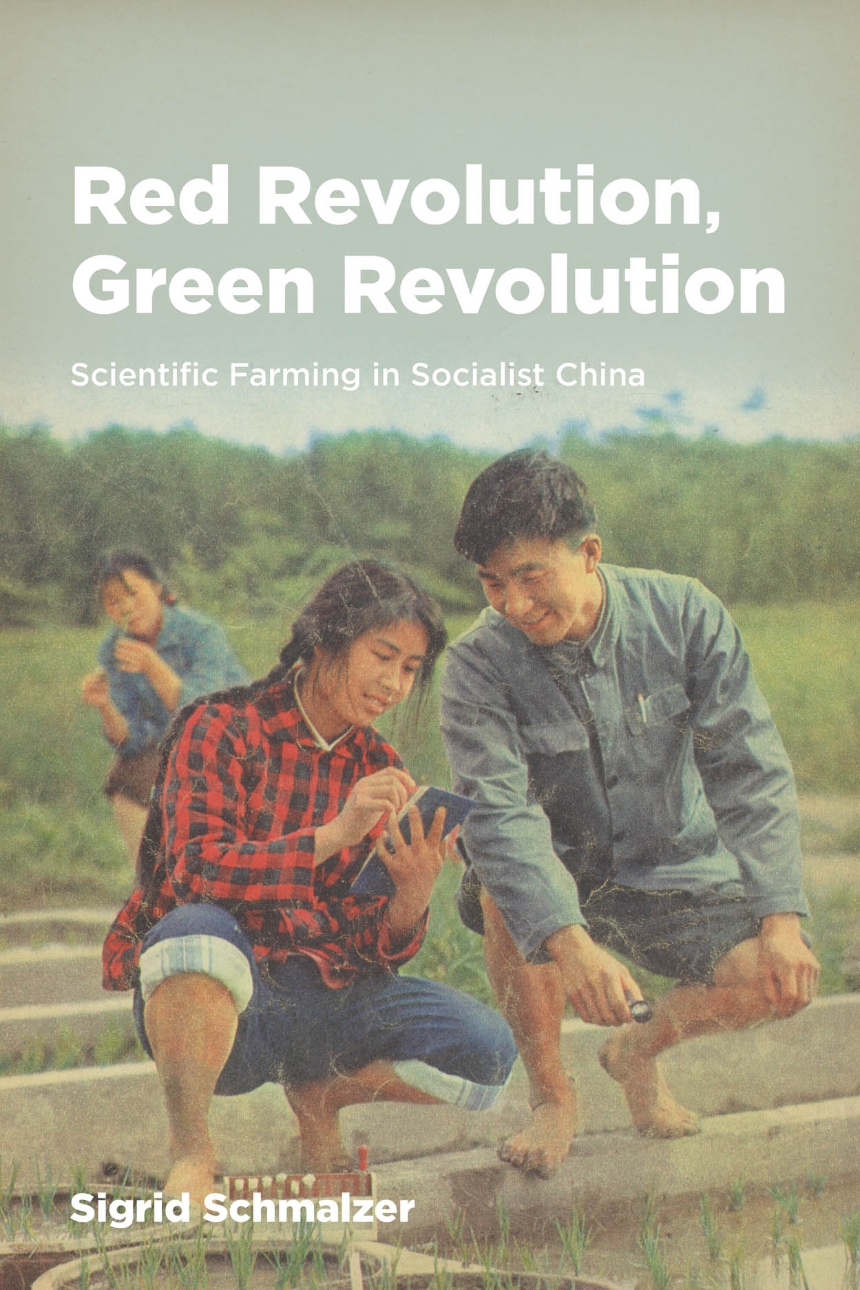
붉은 녹색혁명 - 마오 시대 중국의 농업개혁과 군중과학, Schmalzer
Red Revolution, Green Revolution: Scientific Farming in Socialist China, Schmalzer Save Cover Previewfor Red Revolution, Green Revolution...
-
[다산칼럼] '탈원전 대참사' 극복한 체코 원전 수주 [다산칼럼] '탈원전 대참사' 극복한 체코 원전 수주 입력2024.09.09. 오전 12:09 기사원문 文정권 '자해적' 에너지 정책 산업·경제에 큰 상처...
-
Christian Felber | HuffPost Christian Felber Initiator of the Economy for the Common Good Christian Felber is founder of the The Economy For...
-
Love and Capital: Karl and Jenny Marx and the Birth of a Revolution by Mary Gabriel | Goodreads Love and Capital: Karl and Jenny Marx and th...


